A First Showcase with Room for More Than One Strength
Plan a small group showcase that lets people present in different ways, move smoothly between contributions, and reflect without making one format the standard.
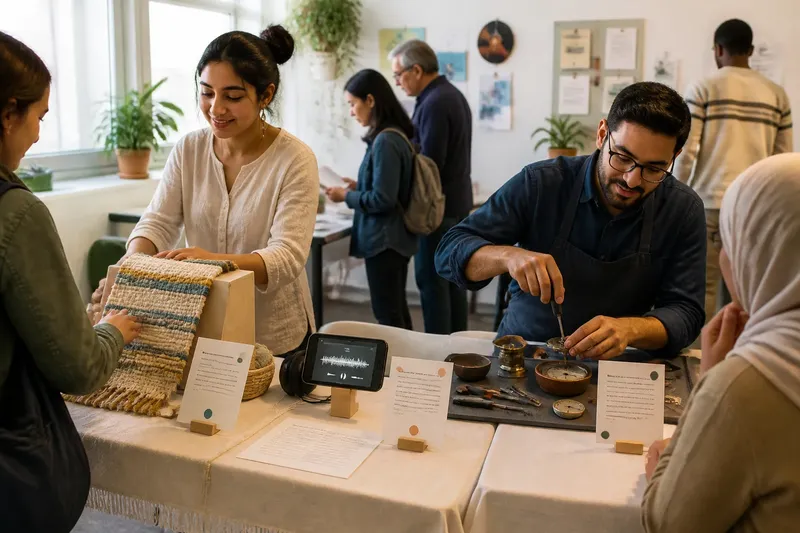
A folding table holds a stitched cloth, a phone plays a short audio piece, and someone stands ready to demonstrate a repair. A first group showcase can make room for all three without turning any participant into a reluctant speechmaker. The useful planning question is not how to make every contribution look alike; it is how to help visitors meet each one on its own terms.
For a small community group, a showcase is an opportunity to share work and notice what kinds of participation feel possible. Build it around choice: participants decide how their work appears, the group makes transitions clear, and reflection has a place before everyone packs up.
Set the invitation
Begin with a direct invitation that names the purpose, audience, setting, and likely shape of the event. Say whether visitors will browse, sit for a short program, or move among stations. Explain that participants can show a finished piece, a work in progress, a process, or an idea they want to discuss.
Make clear that presenting does not have to mean standing and speaking. Someone might display a drawing with a written note, play a recording, demonstrate a hand movement, share a recipe card, or invite visitors to handle a sample. A participant can also contribute behind the scenes, such as arranging materials or welcoming visitors, if that suits the group’s purpose.
Ask each person privately what they would like visitors to notice and what would make sharing comfortable. Offer prompts rather than a blank page: “What part do you want people to see?” and “Would you rather explain it, write about it, or let the work speak first?” The answers help with planning; they are not a vote on whose work deserves space.
Choose a shared shape
Pick a format that fits the room and the kinds of contributions people want to bring. A gallery walk gives visitors freedom to linger; a short sequence of presentations gives each person a clear turn; a hybrid can pair a brief welcome with open browsing. Check that the format can accommodate participants’ chosen ways of sharing before announcing it.
Sketch the event on paper before arranging furniture. Mark the entrance, display areas, seats, quieter corners, and visitor path. Leave room for people to pause without blocking someone who wants to move on. If a demonstration needs a table or a particular viewing angle, place it where visitors can gather without taking over the whole room.
Agree on a common frame, not a common style. A card beside each contribution could include the creator’s chosen name, the title or description, and an optional note about materials, process, or context. Let participants decide whether to include personal background; a showcase can welcome a community without asking anyone to explain or represent it.
Match each work
Ask each participant to choose a presentation mode, then work out the practical details together. A physical object may need a stable surface; a sound piece may need headphones or a quiet listening spot; a demonstration may need clear space and a good view. A spoken contribution might be recorded, delivered live, or paired with a written version.
Keep support simple and visible. Use readable cards, uncluttered displays, and labels that explain what visitors can do: “Listen here,” “Please ask before handling,” or “Watch from this side.” If a contribution is interactive, agree on how visitors will take part and how the creator can pause or decline questions.
Say you are organizing a neighborhood showcase with a woven sample, a short spoken story, and a small collection of repaired objects. The weaver chooses a display card and a sample visitors may touch; the storyteller chooses a recording and a printed transcript; the repairer plans a short live demonstration. Visitors can listen, read, look, or watch, and no one has to adopt a speech as the default format.
Plan clear transitions
Transitions help visitors understand what is happening next and give participants a moment to reset. If the event uses stations, mark the route with simple signs and make clear that people may browse in any order. If it uses a sequence, name the order in advance and tell the audience how to move between turns.
Choose a host for transitions if the group wants one. The host’s job is to give short, neutral cues: where to look next, when a demonstration is beginning, and whether visitors should hold questions until the end. They should not interpret a contribution on the creator’s behalf or fill silence the creator has chosen to leave.
Build a quiet pause into the flow. After a demonstration or recording, allow visitors to look, listen, or move on before the next contribution begins. If a participant changes their mind on the day, the host can shift the order or invite visitors to browse elsewhere; the plan should make that change ordinary rather than a public problem.
Prepare the room
Walk through the space as a visitor would. Check that displays are easy to approach, signs are readable, and seats are available for people who want them. Keep the entrance and paths clear, and avoid placing a sound source beside a contribution that depends on quiet.
Make a materials list based on the participants’ actual choices: table coverings, display stands, a printed transcript, headphones, name cards, or supplies for a demonstration. Ask what people are bringing and what support they need, then assign someone to each shared task. A quick setup rehearsal can reveal confusing labels or a transition that leaves visitors wondering where to go.
Coordinated borders, elaborate decorations, and identical scripts are rarely worth the effort if they flatten the differences the showcase is meant to hold. Prioritize legibility, access, and a calm route through the room.
Welcome visitors well
At the opening, explain the shape of the event and the choices visitors have. Tell them they may browse quietly, ask questions when invited, or pass by a station. A brief welcome should orient people without consuming the time participants need to share.
Ask visitors to respond to the work rather than assess the person. A host might invite comments such as “I noticed…” or “I’m curious about…,” while reminding people to ask before touching or photographing. Participants should be able to set boundaries around questions, images, and handling without needing to justify them.
If a contribution has a language, sound, or access consideration, make the available option apparent without spotlighting its creator. A printed transcript, clear signage, or a seat near a demonstration can help visitors engage while leaving the participant in control of how much explanation to offer.
Make room for reflection
Set aside a short closing period for participants, away from the visitor flow if possible. Offer a choice of ways to reflect: a spoken conversation, a few written notes, or a quiet check-in with the organizer. Ask what felt comfortable, what visitors seemed to understand, and what support might make a future sharing opportunity more workable.
Do not turn reflection into a scorecard or a demand for public disclosure. Participants may want to keep their thoughts private, and useful observations may arrive later. Collect only what the group needs to plan another event, and ask before sharing anyone’s comments beyond the planning team.
After the event, offer practical thanks and follow through on any promises. Return borrowed materials, share photos or recordings only with permission, and let participants know whether the group plans to display, store, or remove their work. A considerate ending gives people a clear choice about what happens to their contribution after visitors leave.
What should the plan answer?
How can someone present without speaking live?
Offer options such as a display card, a recorded explanation, a printed transcript, or a demonstration hosted by someone the participant chooses. Confirm the wording and format with the creator so the alternative reflects what they intend to share.
How do you keep transitions from feeling awkward?
Tell visitors what comes next, use a host for brief cues, and allow a pause between contributions. A clear route or simple program can do more than filling every quiet moment with announcements.
What if someone wants to change their contribution?
Let participants know before the event that they can revise, shorten, or withdraw their presentation. Keep a flexible order and a spare display area so a change does not require a public explanation.
How should visitors respond to work?
Set expectations at the welcome: ask before touching or photographing, and direct questions to the creator only when they are open to them. Invite specific, respectful observations rather than rankings or unsolicited advice.
Keep the next door open
Once the room is cleared, note which arrangements made participation easier and which details need attention next time. Keep useful materials, such as a sign template or simple room sketch, but revise them with participants’ feedback rather than treating the first plan as permanent.
A first showcase does not need to settle how anyone should share their abilities. It can offer a well-marked place where a visitor may listen, look, read, or watch, and where each participant retains a say in how their work is met. For the next showcase, keep the choices that worked and make one clear adjustment based on what participants say they need.