Practice Alone or Learn Alongside Someone?
Practice alone or learn alongside someone? Choose a format that fits the task, so focused repetition and useful feedback each have room to work.
You’re sounding out a difficult phrase on a borrowed keyboard when a friend leans over and offers a correction. The note is useful; the interruption is not. Practice alone or learn alongside someone? The answer depends less on which format is better than on what the next stretch of learning asks you to do.
Some tasks need quiet repetition so attention can settle on a small detail. Others improve when another person can hear, see, or question what you are doing. The useful choice is not a permanent identity—“solo learner” or “group learner”—but a match between the task and the kind of attention it needs.
What does the task ask?
Start by naming the work in plain terms. Is the goal to repeat a known motion, remember a sequence, notice a subtle difference, or make a judgment that benefits from another perspective? A task can involve several of these, but one is often taking the lead.
Independent practice suits work where you need to control the pace and direct attention inward. A language learner might repeat a tricky sound, pausing to notice where the tongue rests. A potter might rehearse a familiar hand position with clay before asking for feedback on the finished form.
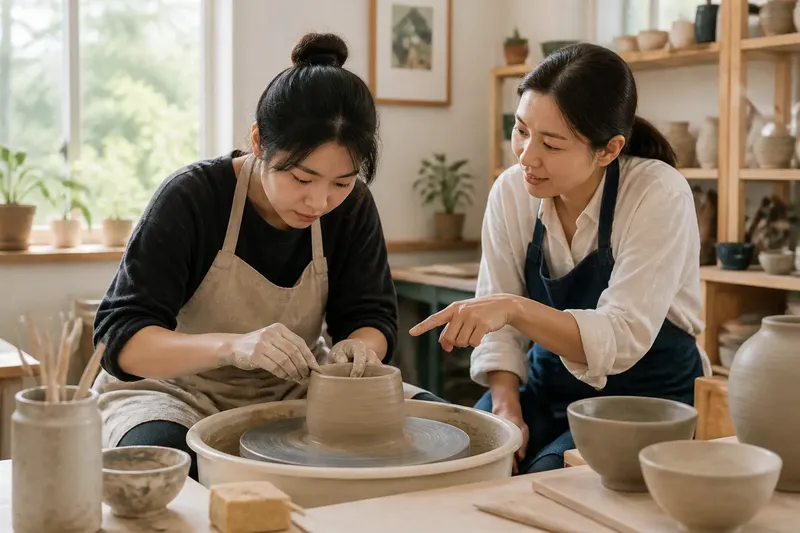
Learning alongside someone fits tasks where another person can reveal something you cannot easily see alone. A partner may hear that a spoken phrase sounds strained, notice that a movement loses balance, or ask why you chose one color over another. That outside view is most helpful when it points to a specific decision, not when it becomes a running commentary.
Ask what would make the next attempt more informative. If you need to notice your own timing, another voice may compete with the signal. If you cannot tell whether your explanation makes sense, a listener can expose the gap quickly.
When does solo practice help?
Solo practice helps when you need uninterrupted attention, many low-pressure repetitions, or room to make mistakes without responding to anyone else. It can be especially useful for a new sequence: the learner can stop, restart, and examine a difficult portion without holding up a partner.
It also makes it easier to follow a question as it arises. If a calligrapher is trying to understand how pen angle changes a stroke, a quiet session can leave space to vary one choice and observe the mark. A peer may have valuable advice later, but the first task is to notice what the hand is doing.
There is a limit. Repetition can make an action feel familiar without making it more accurate. If the same difficulty persists, pause and describe what is going wrong. A note such as “the final sound fades” or “the edge buckles when the clay turns” gives a later partner something useful to respond to.
Keep solo sessions narrow enough to learn from. Choose one element, such as a rhythm, grip, or transition, and decide what you will pay attention to. Trying to correct every detail at once can leave you with plenty of effort and little clarity.
When does a partner help?
A partner helps when feedback can reveal a difference between what you intend and what another person experiences. That matters in performance, explanation, conversation, and any practice where the result is meant to be understood or used by someone else.
Choose a partner who can give observations rather than simply pronounce a verdict. “The opening sentence is hard to follow because I don’t know who ‘they’ refers to” gives the learner a place to work. “That was bad” offers no useful direction, while “perfect” may close off questions the learner still has.
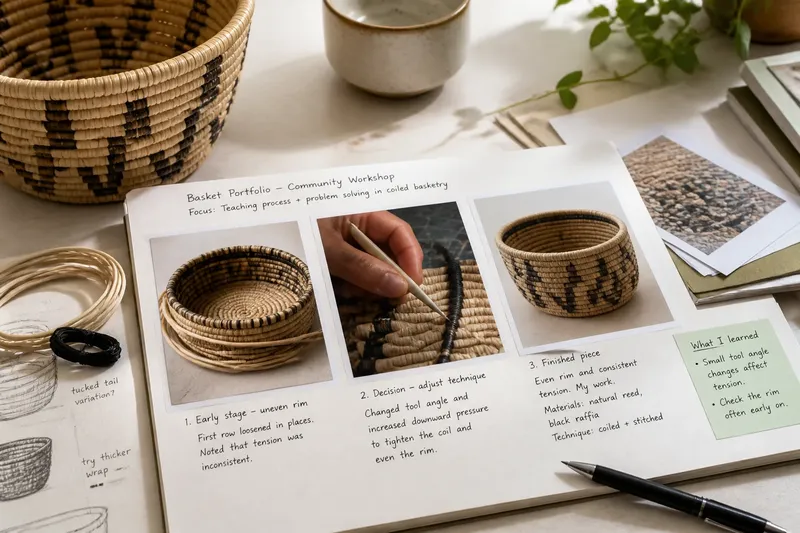
Learning together can also make comparison visible. Two people working on the same weaving pattern may find different ways to hold tension. They can describe what they tried and what changed, without assuming that one person’s method must suit both.
Exchange works best when both people know what kind of help is wanted. One learner may want a listener to stay quiet until the end; another may need an immediate cue when a sequence slips. Agreeing on that preference prevents feedback from arriving at the wrong moment.
How should feedback fit?
Useful feedback is timely, specific, and connected to the learner’s aim. Immediate comments can help with a visible or audible adjustment, but they can also break concentration. Delayed comments let a learner complete a sequence and reflect before hearing another view.
Try separating the attempt from the conversation. Let the learner finish a short passage, demonstration, or explanation, then ask what they noticed. A partner can add one observation and ask whether the learner wants to try again with that detail in mind.
Feedback should describe evidence before recommending a change. “The second attempt was easier to hear from the back of the room” is more actionable than “project more,” because it tells the learner what changed without prescribing a single technique. The learner can then decide which adjustment to explore.
Not every comment deserves a trial. Advice may reflect a partner’s preference, a different goal, or a method that works in another setting. Ask what the comment is based on and whether it addresses the current task; set aside suggestions that do not answer either question.
How can you combine both?
Many learning tasks benefit from alternating formats rather than choosing one for the whole session. Work alone long enough to notice a problem, share a focused attempt with a partner, then return to solo practice to explore the feedback. The sequence keeps outside input connected to something the learner has actually noticed.
Say you are learning to explain a local craft technique to visitors, but your description keeps getting tangled. First, draft and rehearse it alone, marking the point where the explanation stops feeling clear. Then ask a peer to listen without interrupting and tell you where the thread was hardest to follow. Revise that passage, rehearse it alone again, and invite the peer back only if a new question remains.
The important part is the handoff. Solo work produces a question; the shared attempt makes that question visible to someone else; another solo round gives the learner time to decide what to do with the answer. The partner is not there to take over the practice.
For a recurring activity, the handoff can happen within one session or across several sessions. A musician might rehearse a passage privately and bring a short section to a teacher. A community language group might discuss a new expression together, then give each person quiet time to try it in an original sentence.
What if you have no partner?
You can still gather useful evidence on your own. Record a spoken explanation, photograph a sequence of visual work, or keep a brief practice note about what felt easier and what remained uncertain. These traces let you compare attempts without relying entirely on memory.
A recording is not a substitute for every kind of feedback. It can help you hear pacing, but it cannot tell you how an audience understood the idea. A photograph may show a shape clearly while missing the feel of a tool in the hand. Treat it as one viewpoint, not a final judgment.
When you do seek a partner, make the request small. Ask a classmate to listen for one point, invite a neighbor to look at two versions of a design, or bring one question to a teacher or experienced practitioner. A focused request is easier to answer than “Can you help me improve everything?”
If a suitable partner is unavailable, choose a prompt that can stand in for an audience: explain the process in a few sentences, follow written instructions without adding extra steps, or compare the current attempt with the goal you wrote down. These methods sharpen observation, though they cannot provide another person’s response.
Practice Alone or Learn Alongside Someone?
How do I know if I need feedback?
Ask whether the difficulty depends on information you cannot observe by yourself. If you can identify the next adjustment and judge its effect, a quiet attempt may be enough. If the task depends on how another person hears, sees, or interprets your work, invite a focused response.
Is it better to practice before a lesson?
A short solo attempt can help you arrive with a concrete question instead of a vague sense of difficulty. Avoid rehearsing a confusing approach until it feels fixed; bring the uncertain part to the lesson and explain what you tried.
What should I ask a practice partner?
Give the partner one thing to notice, such as where an explanation becomes unclear or which movement looks least steady. Also say when you want the comment: during the attempt, after a short section, or once you have finished.
What if feedback feels discouraging?
Pause and separate the observation from the judgment you may be hearing in it. Ask for a concrete description of what the partner noticed, or decide to return to the comment later; feedback is information to consider, not a verdict on your ability.
Keep the effort useful
The choice between practice alone and learning alongside someone is worth revisiting as the task changes. Early repetition may need privacy, while a later attempt may need a listener who can say what came across. A familiar skill can also become difficult again when the setting, materials, or audience changes.
Notice what the last session gave you. Did you gain steadier attention, or did you leave with a question that only another person could answer? Let that clue shape the next session rather than following a fixed rule about always practicing alone or always learning in a group.
It is not worth arranging a partner for every repetition, or collecting feedback just because someone is nearby. A single clear observation can be more useful than a stream of comments, and some quiet work needs no audience at all. Choose practice alone or learn alongside someone according to the next piece of information the task requires, then give yourself time to act on it.